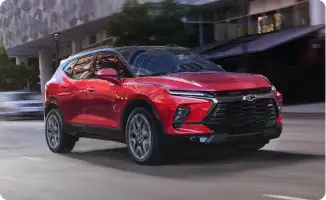
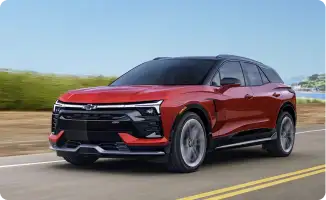
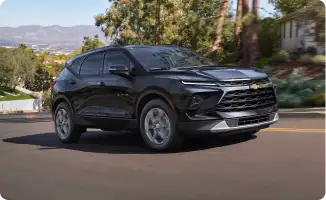
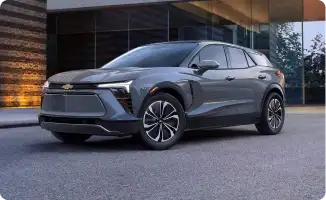
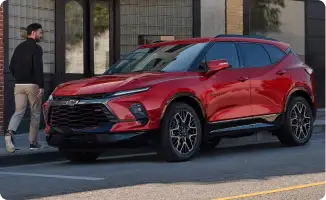
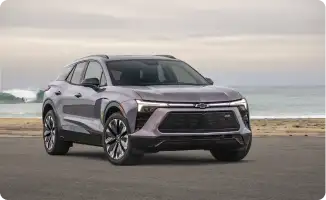
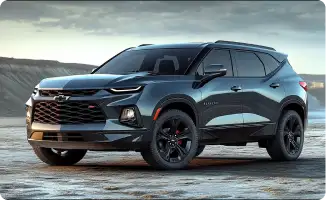
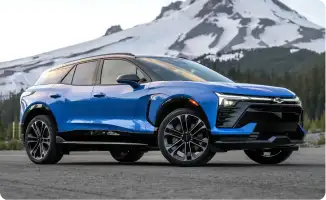
The 2026 Chevy Blazer and 2026 Chevy Blazer EV share a name and not much else. The gas Blazer is a midsize SUV with an internal-combustion powertrain. The Blazer EV is a dedicated electric vehicle built on a different platform with a longer wheelbase, a larger touchscreen, and its own drivetrain architecture. Shoppers cross-shopping the two are really making a gas-versus-electric decision tied together by a shared nameplate.
At a Glance
Same Name, Different Platforms
Price and Trim Lineup
Powertrain and Drivetrain
Performance
Range and Refueling
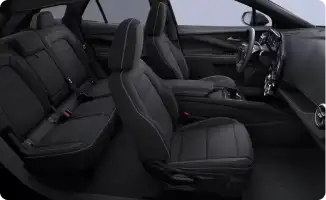
Size, Interior Space, and Cargo
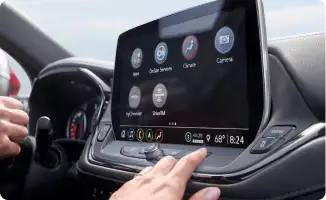
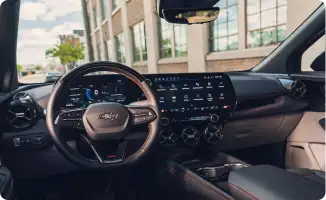
Technology and Infotainment
Safety
Towing
Warranty
Trim Personality
Which One Should You Choose?
Shop the 2026 Blazer and Blazer EV
Frequently Asked Questions
At a Glance
2026 Chevy Blazer
2026 Chevy Blazer EV
Starting Price
Mid $30Ks (2LT FWD)
Mid $40Ks (LT FWD)
Powertrain
2.0L Turbo (V6 available on RS AWD)
Electric drive (85 kWh or 102 kWh battery)
Transmission
9-speed automatic
Electronic Precision Shift (no conventional transmission)
Drivetrain
FWD or AWD
Single motor, Dual Motor AWD, or Performance Dual Motor AWD
Best Fuel Economy / Range
Up to 25 MPG combined (FWD)
Up to 312 miles estimated range (LT and RS FWD)
Max Towing
Up to 4,500 lbs (with available Trailering Package)
Up to 1,500 lbs (LT with package, RS standard; SS not rated)
Max Cargo
64.20 cu ft
59.10 cu ft
Center Touchscreen
10.2-inch
17.7-inch
Super Cruise
Not offered
Available on LT and RS; Standard on SS
Wheelbase
112.70 in
121.80 in
Trims
2LT, 3LT, RS
LT, RS, SS
Same Name, Two Different Platforms
Although they share the Blazer name, the two vehicles are built on completely different platforms. The Blazer EV runs a 121.80-inch wheelbase. The gas Blazer runs a 112.70-inch wheelbase. A difference of more than nine inches between the wheels, within vehicles of nearly identical overall length (192.23 inches on the EV versus 191.80 inches on the gas Blazer), tells the packaging story. The EV puts more of its body between the wheels, a layout typical of dedicated electric vehicles. The gas Blazer follows a more conventional midsize crossover layout with a shorter wheelbase and more traditional hood-and-cabin proportions.
The practical consequence is that the two vehicles drive differently, package their interiors differently, and appeal to different buyer profiles. The Blazer EV is a dedicated electric design. The gas Blazer is an internal-combustion midsize SUV that carries the Blazer name and design language.
Price and Trim Lineup
The gas Blazer starts in the mid $30Ks at the 2LT FWD and tops out in the high $40Ks at the RS AWD. Three trims cover the lineup, each available in FWD or AWD.
2026 Blazer Trim
FWD
AWD
2LT
Mid $30Ks
High $30Ks
3LT
High $30Ks
Mid $40Ks
RS
Low $40Ks
High $40Ks
The Blazer EV starts in the mid $40Ks at the LT FWD and climbs into the low $60Ks at the SS AWD. Three trims make up the EV lineup. The LT and RS are available in FWD or AWD. The SS is AWD-only.
2026 Blazer EV Trim
FWD
AWD
LT
Mid $40Ks
High $40Ks
RS
Low $50Ks
Mid $50Ks
SS
Not available
Low $60Ks
Across comparable entry trims, the Blazer EV runs a full pricing tier above the gas Blazer, reflecting both the EV hardware content and the feature set differences between the two lineups. Check Gordon Chevrolet's current specials for the latest offers on both the Blazer and Blazer EV.
Powertrain and Drivetrain
The gas Blazer and Blazer EV use fundamentally different propulsion systems.
Powertrain
Blazer
Blazer EV
Propulsion
2.0L Turbo 4-cylinder
Electric drive unit
Available Upgrade
3.6L V6 on RS AWD only (308 hp, 270 lb-ft)
Performance Dual Motor on SS only
Transmission
9-speed automatic
Electronic Precision Shift (no conventional transmission)
FWD Configuration
Standard on all trims
Single motor (LT, RS)
AWD Configuration
Available on all trims
Dual Motor on LT and RS; Performance Dual Motor on SS
Advanced AWD System
Twin-Clutch AWD on RS AWD with V6
Performance Dual Motor AWD on SS AWD
The gas Blazer's single-engine approach keeps the lineup mechanically consistent. All three trims run the 2.0L Turbo by default, paired with a 9-speed automatic. The V6 appears only if you select the RS AWD and opt for the upgrade, and it brings the Advanced Twin-Clutch AWD system with it.
The Blazer EV's drive system is tied directly to drivetrain choice. Single-motor FWD on the LT FWD and RS FWD. Dual Motor AWD on the LT AWD and RS AWD. A dedicated Performance Dual Motor AWD system on the SS, which is AWD-only. The electric drive unit replaces the conventional transmission with Electronic Precision Shift.
Both lineups have a named performance option: the gas V6 on the RS AWD and the Blazer EV SS AWD. Those two trims get their own treatment below.
Performance: The V6 and the SS
Each lineup has one trim positioned as the performance option, and the two sit in different performance classes.
Performance Option
Gas Blazer RS AWD with V6
Blazer EV SS AWD
Horsepower
308 hp
615 hp (with Wide Open Watts mode)
Torque
270 lb-ft
650 lb-ft
0-60 MPH
TBD
3.4 seconds (GM estimated)
Drivetrain
Advanced Twin-Clutch AWD
Performance Dual Motor AWD
Fuel Source
3.6L V6 gasoline
102 kWh electric (larger than the 85 kWh on LT and RS)
Starting Price
High $40Ks
Low $60Ks
The gas RS AWD with V6 is the only Blazer configuration that gets the V6 engine and the only one with the Advanced Twin-Clutch AWD system. It sits at the top of the gas lineup.
The Blazer EV SS AWD is a different category of performance vehicle. Chevrolet describes the SS as the quickest SS model it has ever produced. The larger 102 kWh battery delivers an estimated 302 miles of range, which is more than the LT AWD and RS AWD deliver with the smaller 85 kWh battery, despite the SS's performance orientation.
Range, Efficiency, and How You Refuel
Range and efficiency are measured differently on the two vehicles. The gas Blazer reports miles per gallon. The Blazer EV reports miles of estimated range and miles per gallon equivalent (MPGe). The figures are not directly comparable, but each vehicle is strong by its own measure.
The gas Blazer fuel economy, with the 2.0L Turbo and 9-speed automatic across every trim:
Gas Blazer
City
Highway
Combined
Fuel Tank
FWD (all trims)
22
29
25
19.4 gal
AWD (all trims, 2.0L)
22
27
24
21.7 gal
The Blazer EV range and efficiency, by trim and drivetrain:
Blazer EV
City MPGe
Highway MPGe
Combined MPGe
Estimated Range
LT FWD / RS FWD
114
95
104
312 miles
LT AWD / RS AWD
102
86
94
283 miles
SS AWD
92
77
85
302 miles
How You Refuel
The gas Blazer runs on conventional gasoline and carries a 19.4-gallon fuel tank in FWD or a 21.7-gallon tank in AWD. Refueling takes a few minutes at any gas station.
The Blazer EV includes charging equipment standard across every trim. An 11.5 kW onboard charging module handles AC charging. A Dual Level Charge Cord comes included, supporting both Level 1 (120V household outlet) and Level 2 (240V) charging. Vehicle-to-Home (V2H) capability is standard on every Blazer EV trim and, paired with the GM Energy PowerShift Charger, allows the vehicle to supply backup power to a home during an outage. Blazer EV drivers have access to more than 250,000 public chargers across North America and more than 20,000 Tesla Superchargers via the myChevrolet mobile app, with a GM-approved NACS DC adapter required for Tesla Supercharger access. For more on Chevrolet's electric charging ecosystem, see the GM Energy overview.
Size, Interior Space, and Cargo
The two vehicles are nearly the same overall length, but the Blazer EV's longer wheelbase and different battery packaging produce a noticeably different interior layout.
Exterior
Blazer
Blazer EV
Wheelbase
112.70 in
121.80 in
Overall Length
191.80 in
192.23 in (SS: 192.65 in)
Overall Height
67.00 in
65.05 in (SS: 64.78 in)
Max Width (no mirrors)
76.70 in
78.02 in
Ground Clearance
7.50 in (2LT / 3LT); 7.60 in (RS)
7.97 in (LT FWD); 7.89 in (LT / RS AWD); 7.49 in (SS)
Inside, the Blazer EV's wheelbase advantage shows up at the front of the cabin rather than the rear. Front legroom on the EV is 44.20 inches, a substantial gain over the gas Blazer's 41.00 inches. Second-row legroom is close to a tie, with a slight edge to the gas Blazer at 39.60 inches versus 38.92 inches on the EV. The EV's extra wheelbase did not translate to extra rear-seat room.
Interior
Blazer
Blazer EV
Passenger Capacity
5
5
Passenger Volume
107.80 cu ft
TBD
Front Headroom
39.80 in
40.88 in
Front Legroom
41.00 in
44.20 in
Front Shoulder Room
59.10 in
58.70 in
Second Row Headroom
38.60 in
38.10 in
Second Row Legroom
39.60 in
38.92 in
Second Row Shoulder Room
58.60 in
58.33 in
Cargo volume tells the opposite story: the gas Blazer carries more cargo at every measurement. The Blazer EV's battery pack takes underfloor space that the gas Blazer uses for cargo capacity, producing roughly a five-cubic-foot deficit behind the rear seats and at maximum capacity.
Cargo
Blazer
Blazer EV
Behind Rear Seats
30.50 cu ft
25.50 cu ft
Maximum
64.20 cu ft
59.10 cu ft
Technology and Infotainment
The Blazer EV represents a more modern and display-centric design than the gas Blazer. The differences are visible the moment you sit down.
Technology
Blazer
Blazer EV
Center Touchscreen
10.2-inch (all trims)
17.7-inch (all trims)
Driver Information Center
4.2-inch (2LT and 3LT); 8-inch (RS)
11-inch (all trims)
Wireless Apple CarPlay and Android Auto
Standard (all trims)
Standard (all trims)
Super Cruise
Not offered
Available on LT and RS; Standard on SS
Wireless Phone Charging
Available on 2LT and 3LT; Standard on RS
Available on LT; Standard on RS and SS
Audio
6-speaker standard; Bose 8-speaker standard on RS
6-speaker on LT and RS; Bose 8-speaker on SS
The most visible difference is display size. The Blazer EV's 17.7-inch touchscreen is substantially larger than the gas Blazer's 10.2-inch screen, and the 11-inch Driver Information Center on the EV is consistent across the lineup. The gas Blazer's DIC scales from 4.2 inches on the 2LT and 3LT up to 8 inches on the RS.
The most significant technology differentiator is Super Cruise, Chevrolet's hands-free driver assistance system for compatible roads. Super Cruise is available on the Blazer EV LT and RS via the Super Cruise Package and standard on the SS AWD with a 3-year OnStar One Super Cruise plan included. Super Cruise is not offered on the gas Blazer lineup.
The Blazer EV also includes Google built-in standard across every trim, and Head-Up Display is available on the RS and standard on the SS.
Safety
The Blazer EV carries a substantially broader set of standard safety features than the gas Blazer. Both vehicles come standard with Chevy Safety Assist, Chevrolet's advanced driver assistance package covering automatic emergency braking, pedestrian detection, lane keep assist, and forward collision alert. Where the two diverge is the standard content beyond that core package.
The Blazer EV adds Enhanced Automatic Emergency Braking, Intersection Automatic Emergency Braking, Blind Zone Steering Assist, Adaptive Cruise Control, HD Surround Vision, and Traffic Sign Recognition as standard equipment across every trim, among a broader set of driver-assist and collision-avoidance features. Teen Driver and HD Rear Vision Camera are also standard across the lineup.
The gas Blazer carries Lane Change Alert with Side Blind Zone Alert, Rear Park Assist, and Rear Cross Traffic Alert standard across all three trims, along with HD Rear Vision Camera, Teen Driver, and Buckle to Drive. Several safety features that come standard on the Blazer EV appear on the gas Blazer as optional upgrades: Enhanced Automatic Emergency Braking, Adaptive Cruise Control, HD Surround Vision (on the 3LT and RS), and Safety Alert Seat (on the RS).
Towing
The gas Blazer is rated for up to 4,500 pounds of towing with the available Trailering Package. Trailering equipment is standard on all AWD gas Blazer trims. Hitch Guidance is standard on all AWD trims, and Hitch View is standard on the RS AWD and available on the 3LT AWD. Learn more about the Advanced Trailering System Chevrolet offers for its towing-capable vehicles.
The Blazer EV handles trailering differently across its lineup. The LT FWD and LT AWD are rated for up to 1,500 pounds of towing when equipped with the Trailering Provisions package; without the package, the LT is not rated for towing. The RS FWD and RS AWD are rated for up to 1,500 pounds standard, with trailering wiring, Hitch Guidance, and Hitch View included. The SS AWD is not set up for trailering, with trailer hitch, wiring, and related features listed as not available.
Warranty
Both vehicles share several warranty components. The drivetrain and roadside coverages diverge meaningfully.
Shared Coverage on Both Vehicles
Coverage
Term
Bumper-to-Bumper Limited Warranty
3 years / 36,000 miles
Corrosion Limited Warranty
3 years / 36,000 miles
Rust-Through Coverage
6 years / 100,000 miles
Scheduled Maintenance
1 visit at 12 months / 12,000 miles
Drivetrain and Roadside Coverage by Vehicle
Coverage
Blazer
Blazer EV
Drivetrain Warranty
5 years / 60,000 miles (powertrain)
8 years / 100,000 miles (battery and electric components)
Roadside Assistance and Courtesy Transportation
5 years / 60,000 miles
8 years / 100,000 miles (courtesy transportation); 5 years / 60,000 miles (roadside)
Towing (Roadside)
Included in roadside assistance
8 years / 100,000 miles
The Blazer EV's 8-year battery and electric components coverage is the longest warranty component on either vehicle and reflects the distinct nature of EV drivetrain repairs.
Trim Personality
Each lineup has its own trim character. The gas Blazer runs from entry-level 2LT through luxury-oriented 3LT to sport-styled RS. The Blazer EV runs from essential LT to street-inspired RS to the high-performance SS.
Gas Blazer: 2LT, 3LT, and RS
2LT
3LT
RS
Character
Entry level
Comfort upgrade
Sport-styled
Engine
2.0L Turbo
2.0L Turbo
2.0L Turbo (V6 available on RS AWD)
Seat Trim
Premium Cloth
Perforated Leather-Appointed
Perforated Leather-Appointed
Driver Seat
8-way power with lumbar
8-way power with lumbar
8-way power with lumbar
Passenger Seat
4-way manual
6-way power
6-way power
Wheels
18-in Grazen Metallic aluminum
18-in Grazen Metallic aluminum
20-in Technical Gray aluminum
Steering Wheel
Urethane
Wrapped
Wrapped and heated
Wireless Phone Charging
Available
Available
Standard
Liftgate
Manual (power available)
Power programmable
Hands-Free Gesture
Driver Info Center
4.2-in
4.2-in
8-in
Audio
6-speaker
6-speaker (Bose available)
Bose 8-speaker
Blazer EV: LT, RS, and SS
LT
RS
SS
Character
Essential electric
Street-inspired
Performance
Battery
85 kWh
85 kWh
102 kWh
Drive
Single motor FWD or Dual Motor AWD
Single motor FWD or Dual Motor AWD
Performance Dual Motor AWD (AWD only)
Range
312 mi FWD / 283 mi AWD
312 mi FWD / 283 mi AWD
302 mi
Wheels
19-in machined-face aluminum
21-in machined-face aluminum
22-in machined-face aluminum
Seat Trim
Black Cloth
Black Perforated suede / Evotex
Perforated suede / Evotex
Driver Seat
6-way manual (8-way power available)
8-way power
8-way power
Climate
Single-zone automatic
Dual-zone automatic
Dual-zone automatic
Heated Steering Wheel
Available
Standard
Standard
Ventilated Seats
Not available
Standard
Standard
Super Cruise
Available via package
Available via package
Standard (with 3-year OnStar Super Cruise plan)
Head-Up Display
Not available
Available
Standard
The two performance options, the gas RS AWD with V6 and the Blazer EV SS AWD, sit at the top of their respective lineups. The RS AWD with V6 is the only gas Blazer configuration that offers the 3.6L V6 and the Advanced Twin-Clutch AWD system. The SS AWD pairs the 615 hp Performance Dual Motor with standard Super Cruise, standard Head-Up Display, and the larger 102 kWh battery that still delivers 302 miles of estimated range despite the performance orientation.
Which One Should You Choose?
If you are not ready to commit to electric, the gas Blazer is the familiar path. Gasoline refueling, established service infrastructure, and no dependence on charging availability. The 2LT FWD in the mid $30Ks is the lowest entry point in this comparison.
New EV buyers will find the Blazer EV LT a reasonable starting point. V2H capability and the Dual Level Charge Cord come standard, which covers home charging for most daily use cases. Access to more than 250,000 public chargers and Tesla Supercharger compatibility (with the NACS DC adapter) covers longer trips.
If maximum performance is the goal, the Blazer EV SS AWD is the clear choice. 615 horsepower, 650 lb-ft of torque, and a 3.4-second 0-60 place it in a different performance class than anything in either lineup. The gas RS AWD with V6 (308 hp, 270 lb-ft) is the gas Blazer's performance answer, priced substantially lower in the high $40Ks.
For shoppers who need to tow, the gas Blazer is the vehicle. Up to 4,500 pounds with the available Trailering Package, and trailering equipment standard on every AWD trim. The Blazer EV LT and RS are rated for up to 1,500 pounds, which covers small utility trailers and light recreational gear but falls short of heavier loads. The SS AWD is not configured for trailering at all.
If cargo space is the priority, the gas Blazer carries about five cubic feet more at every measurement. The Blazer EV's battery pack takes underfloor space that the gas Blazer uses for cargo.
Technology-forward buyers should look hard at the Blazer EV. The 17.7-inch touchscreen, 11-inch Driver Information Center, Super Cruise availability, Head-Up Display on the upper trims, and Google built-in as standard across every trim all favor the EV. None of these appear on the gas Blazer.
Shop the 2026 Blazer and Blazer EV at Gordon Chevrolet
Gordon Chevrolet is a family-owned Chevrolet dealer operating at 31850 Ford Rd in Garden City since 1983, serving shoppers from Plymouth, Northville, Farmington Hills, and the surrounding Metro Detroit area. We price every Blazer and Blazer EV at the True Ad Price. The sticker is the real price, with no hidden fees.
No. Despite sharing the Blazer name, the two vehicles are built on different platforms. The Blazer EV runs a 121.80-inch wheelbase and a dedicated electric propulsion system, while the gas Blazer runs a 112.70-inch wheelbase and uses a 2.0L Turbo 4-cylinder (or an available 3.6L V6 on the RS AWD) with a 9-speed automatic. The two have different dimensions, different drivetrains, and different interior layouts.
Range depends on trim and drivetrain. The LT FWD and RS FWD are rated at 312 miles of estimated range with the 85 kWh battery. The LT AWD and RS AWD are rated at 283 miles with the same battery and dual motors. The SS AWD is rated at 302 miles with its larger 102 kWh battery and the Performance Dual Motor AWD system.
The gas Blazer 2LT FWD starts in the mid $30Ks. The Blazer EV LT FWD starts in the mid $40Ks. At the top of each lineup, the gas RS AWD sits in the high $40Ks while the Blazer EV SS AWD sits in the low $60Ks. The EV runs a full pricing tier higher than comparable gas trims at base and climbs further with the SS.
No. Super Cruise is not offered on the 2026 gas Blazer. It is available on the Blazer EV LT and RS via the Super Cruise Package and standard on the SS AWD with a 3-year OnStar One Super Cruise plan included.
The gas Blazer. It offers 30.50 cubic feet of cargo space behind the rear seats and 64.20 cubic feet at maximum capacity. The Blazer EV offers 25.50 cubic feet behind the rear seats and 59.10 cubic feet at maximum. The EV's battery pack uses underfloor space that reduces cargo volume by roughly five cubic feet at each measurement.
Yes. The gas Blazer is rated for up to 4,500 pounds of towing with the available Trailering Package, and trailering equipment is standard on AWD trims. The Blazer EV LT and RS are rated for up to 1,500 pounds when properly equipped (available on the LT through the Trailering Provisions package, standard on the RS). The Blazer EV SS AWD is not set up for trailering.
Every 2026 gas Blazer trim comes standard with a 2.0L Turbo 4-cylinder paired with a 9-speed automatic. A 3.6L V6 producing 308 horsepower and 270 lb-ft of torque is available exclusively on the RS AWD, also paired with the 9-speed automatic.
The 2026 Blazer EV SS AWD produces 615 horsepower and 650 lb-ft of torque with Wide Open Watts mode engaged, with a GM-estimated 0-60 mph time of 3.4 seconds. Chevrolet describes it as the quickest SS model it has ever produced.
The 2026 Blazer EV battery and electric components carry an 8-year / 100,000-mile warranty, along with 8 years / 100,000 miles of courtesy transportation and 8 years / 100,000 miles of towing roadside coverage. Both the Blazer and Blazer EV share a 3-year / 36,000-mile bumper-to-bumper warranty and 6-year / 100,000-mile rust-through coverage.
Yes. Every Blazer EV includes an 11.5 kW onboard charging module standard and a Dual Level Charge Cord that supports both Level 1 (120V standard outlet) and Level 2 (240V) charging. Vehicle-to-Home (V2H) capability is standard across the lineup and, paired with the GM Energy PowerShift Charger, allows the vehicle to supply backup power to a home during an outage.